



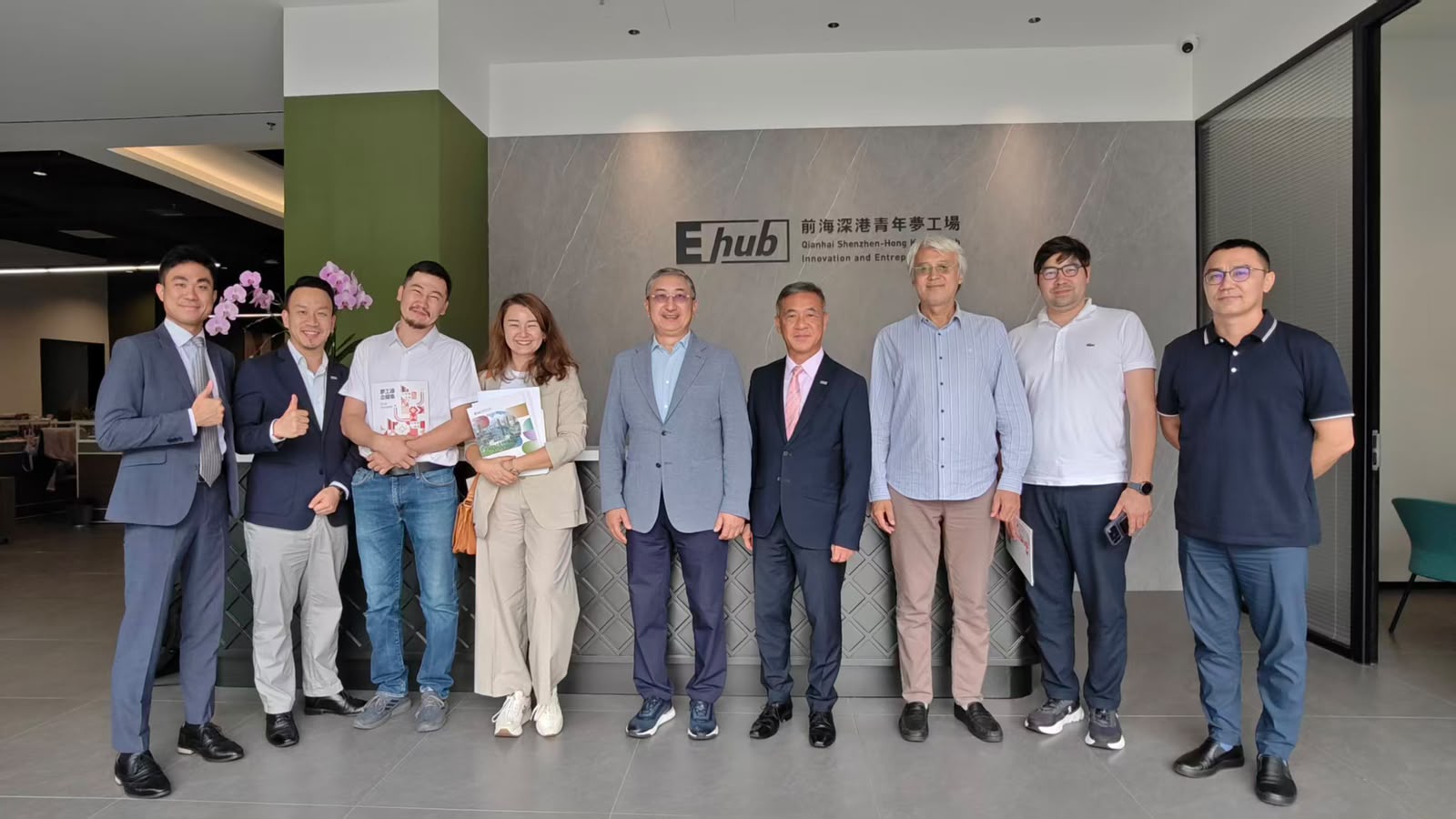
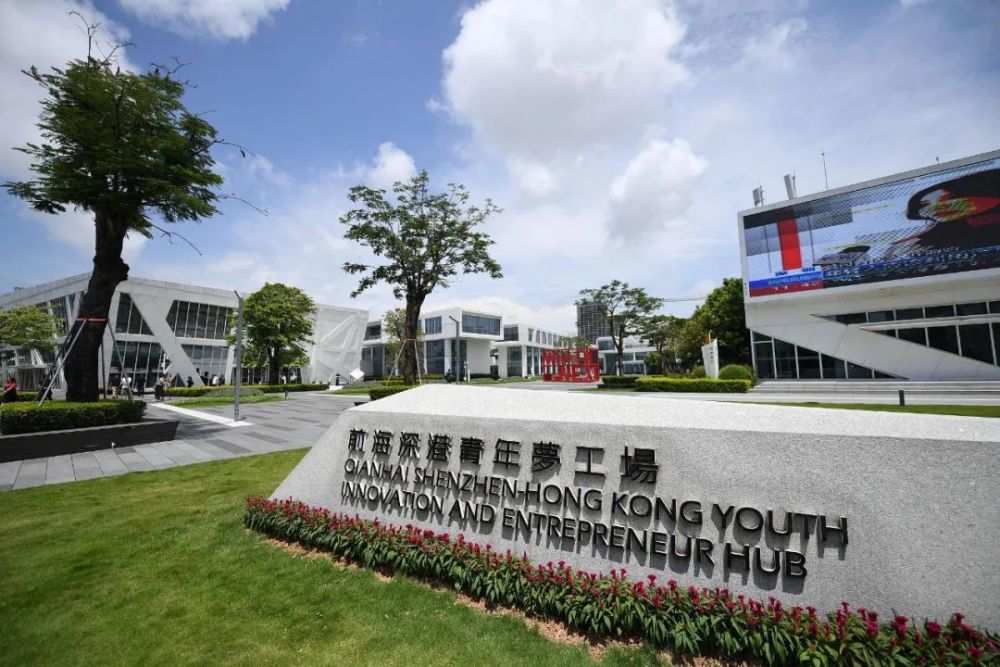
The NU Impact Foundation team, led by Chairman of the Board Sayat Nyussupov, is currently in Shenzhen as part of a visit focused on strengthening NU’s innovation ecosystem. The team has visited the Qianhai Shenzhen–Hong Kong Youth Innovation and Entrepreneur Hub (Ehub), one of the largest youth entrepreneurship platforms. The visit is aimed at exploring opportunities to build a complete industrial prototyping pathway for NU startups, students, and researchers — from an initial idea to a production-ready prototype and, ultimately, entry into global markets.
During the visit, the team met with Ehub founders, mentors, and operators who work every day to address the same challenge: how to take a technology project from an initial idea to a production-ready prototype. It was particularly valuable to see how this journey is structured in practice — from product design and engineering to industrial prototyping, with a clear pathway toward mass production.

“We are systematically developing NU’s innovation ecosystem to ensure that our students and researchers have opportunities not only to create promising technological solutions, but also to turn them into products that are in demand in international markets. Shenzhen opens up new opportunities for us in industrial prototyping, production, and international scaling. Our task in the near future is to integrate these opportunities into our existing startup support system and help Kazakhstani technologies reach the global stage,” said Sayat Nyussupov, Chairman of the Board of NU Impact Foundation.
The Foundation’s ecosystem already has an established and functioning model for supporting startups, with its effectiveness demonstrated by the tangible results achieved by dozens of teams that have gone through this journey. Incubation programs help turn initial ideas into working products, while acceleration programs support the rapid development of projects with ready products and their first customers. International scaling programs, including opportunities through leading global accelerators such as StartX and MassChallenge, help startups access international markets.
An important infrastructure element of this ecosystem will be the NU Science & Technology Park, currently under construction. The technology park will bring together startups, researchers, investors, and industry partners, creating a shared platform for advancing innovation and commercializing technologies.
The visit to Ehub is not an isolated event, but a logical next step in the development of this ecosystem. The Foundation already has a well-established pipeline from idea to a market-ready project. The next challenge is to take the strongest projects beyond initial market entry and help them achieve global scale.
The Foundation’s ecosystem already covers key stages of the innovation journey — from idea development and startup support to technology advancement and market access. SITF is an integral part of this ecosystem, helping projects move forward on the technology development side. The connection with production hubs such as Ehub can help complete the next stage of the journey — moving from a validated prototype to a finished product and, ultimately, to mass production.
The visit to Ehub has confirmed that a pathway from prototype to production can be built and integrated into NU’s innovation ecosystem. The next steps will include launching pilot projects, developing new partnerships, and continuing work to make this pathway accessible to NU students and researchers.